
The Inevitable Rise of AI and Adaptive Learning in Professional Marketing Education: A Blueprint for the Future
Professional associations should build skills based learning offerings.

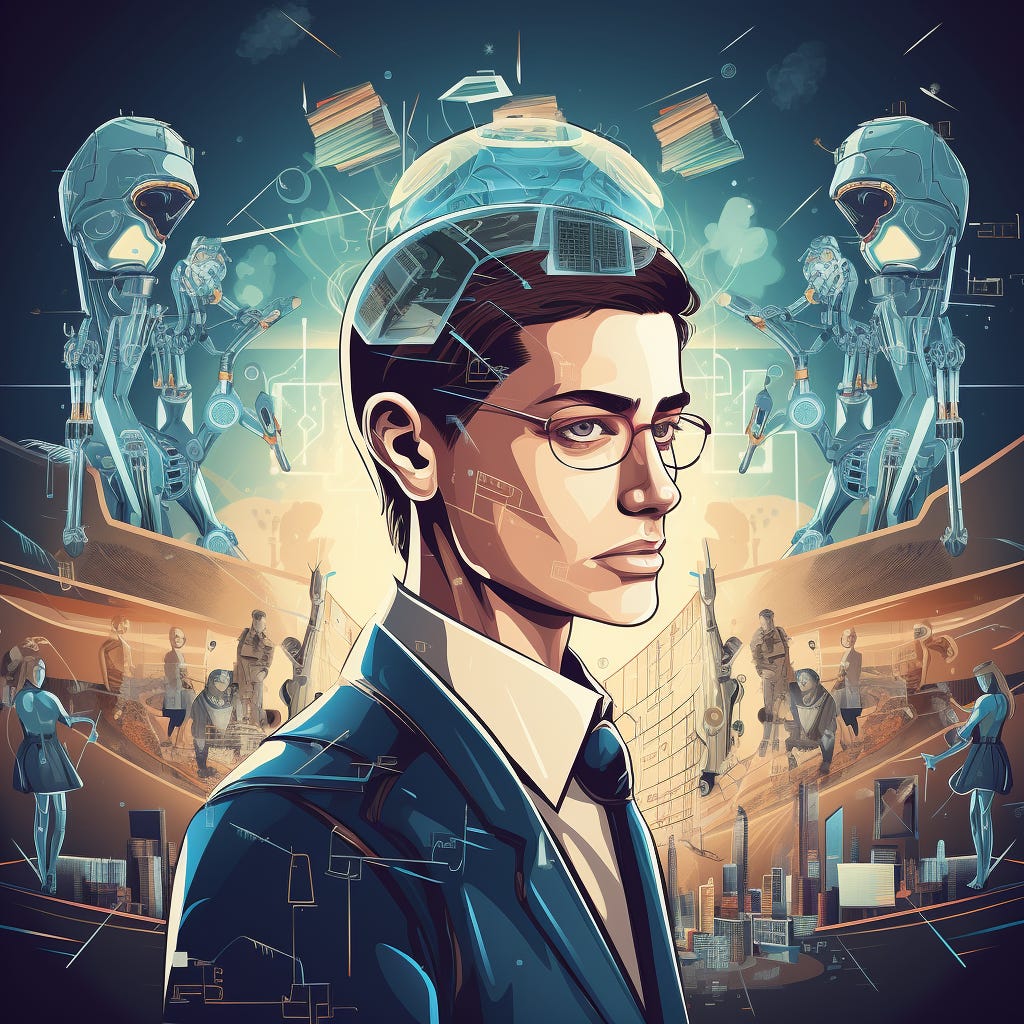
(Illustrations created by me prompting Mid-Journey)
Hello from this obsessed mind of marketing education and lifelong learning, it’s Stephen. Our journey through the compelling universe of adaptive learning continues. If you've been following my Substack series, you know I’ve made a manifesto commitment to champion adaptive learning in marketing courses. Today, I’m diving deeper into a topic that's at the intersection of technology and pedagogy: the role of Artificial Intelligence (AI) in professional marketing education.
Why AI and Adaptive Learning are Inseparable
The tenets of adaptive learning can only be achieved through the intelligent analysis of data—enter AI. This transformative technology can crunch numbers at incomprehensible speeds, transforming abstract data points into actionable educational strategies. AI can enable real-time feedback, generate bespoke course materials, and even predict future educational requirements, all key facets of a genuinely adaptive curriculum.
The Implications for Professional Marketing Education
Up-to-date Content: Marketing trends ebb and flow with unprecedented speed. AI can ensure that course content stays updated, not just by adding new information but also by adjusting learning pathways to incorporate the latest trends.
Dynamic Skill Assessment: For professionals, the time investment needs to yield dividends. AI-backed adaptive learning can perform skill gap analyses to direct learners toward the most relevant modules, ensuring that CPD (Continuing Professional Development) hours are effectively utilized.
Career Progression Modeling: Imagine a learning platform that not only educates but also informs you of the most likely career progressions based on current industry data. By integrating with job market analytics, adaptive learning platforms could guide professionals towards lucrative and fulfilling career paths.
Ethical Considerations and Transparent Data Usage
While the convergence of AI and adaptive learning promises exciting opportunities, it's crucial to be vigilant about the ethical implications. The AI systems must be transparent in how they collect and use data. We must also address the potential biases that could arise from mismanaged algorithms, ensuring equal opportunities for learners from all backgrounds.
The Time is Now: Why Immediate Action is Critical
The reality is, while we theorize and deliberate, the world of marketing is not waiting for us. Consumer behaviors, technology, and societal changes are shifting the landscape rapidly. To attract and retain the next generation of marketing professionals—digital natives who expect hyper-personalized experiences—we must act now. With the maturity of AI and machine learning technologies, the risk associated with their adoption has significantly lowered. Delaying this integration means falling behind, not just technologically but also pedagogically. The opportunity to define ethics, best practices, and standards in this budding arena is ripe for the taking; let’s not let it slip through our fingers.
Building the Future: A Call to Stakeholders
Professional associations and educational institutions need to invest in R&D and collaborate with tech companies specializing in AI and machine learning. These aren't optional extras but prerequisites for remaining relevant in an industry in perpetual flux.
(Illustrations created by me prompting Mid-Journey)
The Way Forward: A Blueprint for Implementation
Pilot Programs: Professional associations should introduce AI-backed adaptive learning in smaller modules before a full-fledged launch.
Collaboration: Leverage relationships within the industry for dataset collection and real-world problem-solving.
Feedback Loop: Implement robust feedback mechanisms, both AI-driven and human-supervised, for continuous improvement.
As we move closer to a future where AI becomes an educational staple, the potential for personalization in professional marketing courses is limitless. But this revolution needs champions—people and institutions willing to invest in a paradigm shift. And that's precisely what this manifesto, and this community, aim to catalyze.
Your insights are always invaluable, so please, share your thoughts, experiences, and critiques. Together, we can lead the way toward an adaptable and personalized future for professional marketing education.
Stephen, signing off!